EcoSmart Learning, Engagement, and Action for the Future. Empowering Ghana’s next generation of environmental champions through education, practical upcycling, and disaster preparedness.
The E-LEAF Project is a flagship initiative of SustainEarth Alliance designed to inspire school children, educators, youth clubs, and local communities to take immediate, meaningful action for the environment.
Through digital learning, storytelling, practical waste upcycling toolkits, and flood-safety curricula, E-LEAF equips communities to build cleaner, greener, and more resilient environments across Ghana.
A Ghana where every individual is environmentally conscious and empowered to protect natural resources for present and future generations.
To advance environmental literacy and inspire sustainable behaviour through innovative education, digital technology, and community-driven action.
Lasting change begins in the classroom. Equipping children with waste segregation habits and drain-clearing awareness helps prevent devastating urban flash floods and cholera outbreaks.
How we structure our environmental education and community action across schools and towns in Ghana.
Engaging classroom lessons, storytelling, posters, and games that simplify ecological concepts and responsible refuse disposal for primary and basic school pupils.
Promoting waste segregation, litter prevention, and hands-on plastic upcycling (converting bags and sachets into mats, pencil holders, and key rings).
Accessible educational platform providing downloadable lesson plans, infographics, video guides, and school quizzes for teachers and students.
Collaborating with local schools, youth groups, and assembly members to organise gutter desilting cleanups, tree planting, and school eco-clubs.
Training young people on disaster safety during heavy downpours, protecting open drains, and acting as climate safety ambassadors in flood-prone areas.
Basic school pupils, educators, environmental clubs, parents, community youth groups, and local municipal authorities across Ghana.
Browse through official educational modules, hands-on DIY upcycling instructions, and flood safety materials.
Curriculum designed for Ghanaian Basic Schools by SustainEarth Alliance. Below are the 6 foundational classroom lessons:
The environment is everything around us: air, water, trees, animals, people, homes, and schools. A clean environment ensures good health, safety, and well-being.
Throwing rubbish anywhere instead of placing it in a dustbin. Includes tossing plastic on roads, into open drains, or into rivers.
Chokes drainage gutters causing flash floods; spreads cholera and diarrhoea; breeds malaria-carrying mosquitoes; pollutes local drinking water bodies.
Developing daily discipline to use dustbins and practice basic waste sorting: separating organic food peelings from dry plastics and paper.
Rivers sustain communities and provide drinking water. Dumping plastics and refuse into water sources kills aquatic life and poisons community supplies.
Practical circular economy habits: reducing single-use plastic consumption, reusing durable containers, and upcycling clean plastic packaging.
Transforming common plastic waste into durable household and classroom items. Click on any guide to view instructions or download the PDF:
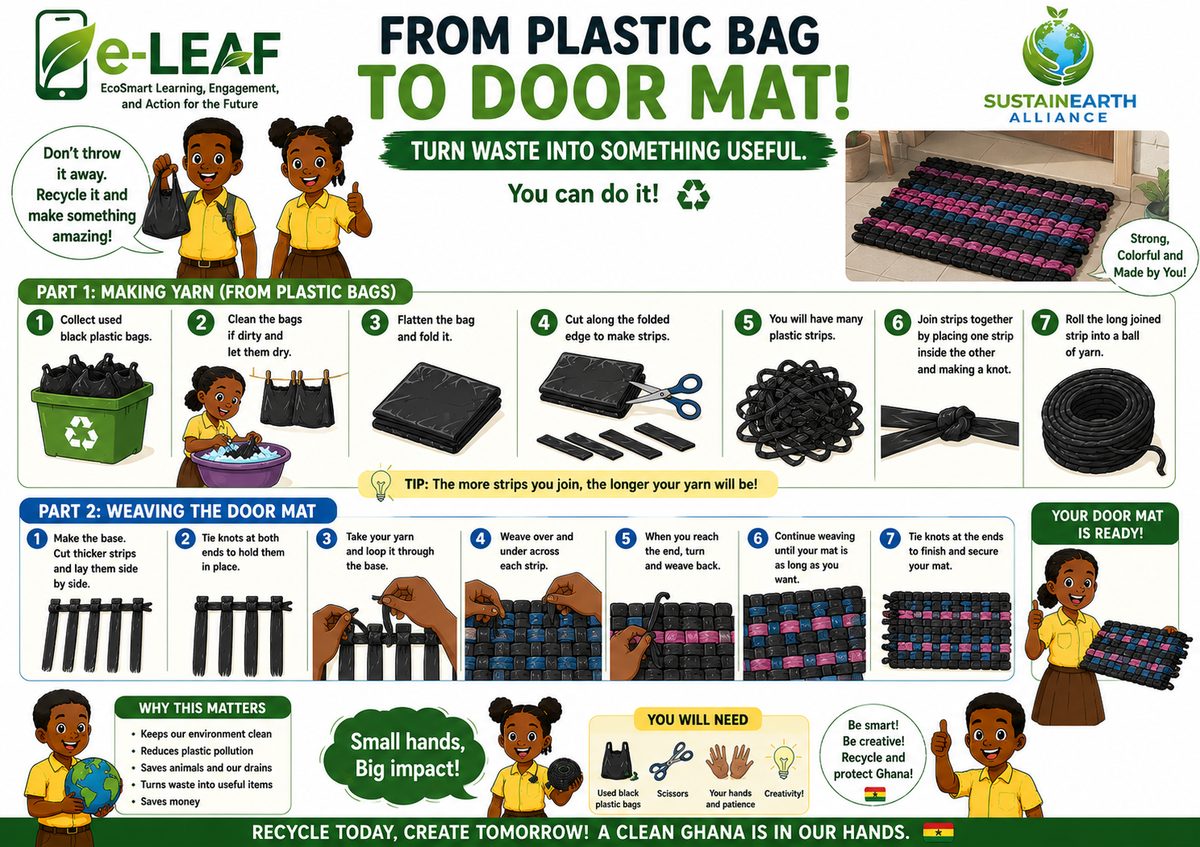
Step-by-step instructions to clean, cut, loop, and weave discarded carrier bags into waterproof door mats for homes and schools.
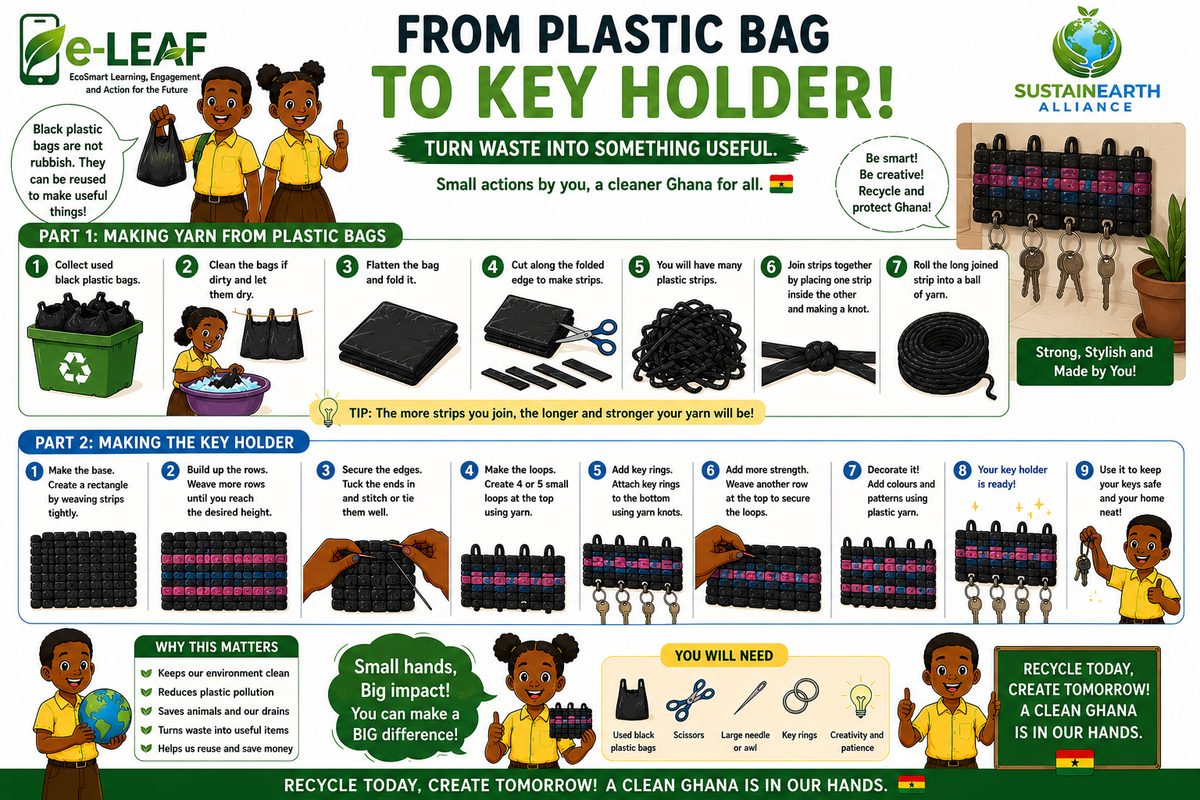
How to braid colorful plastic bag strips into stylish, water-resistant keychains and school bag tags.
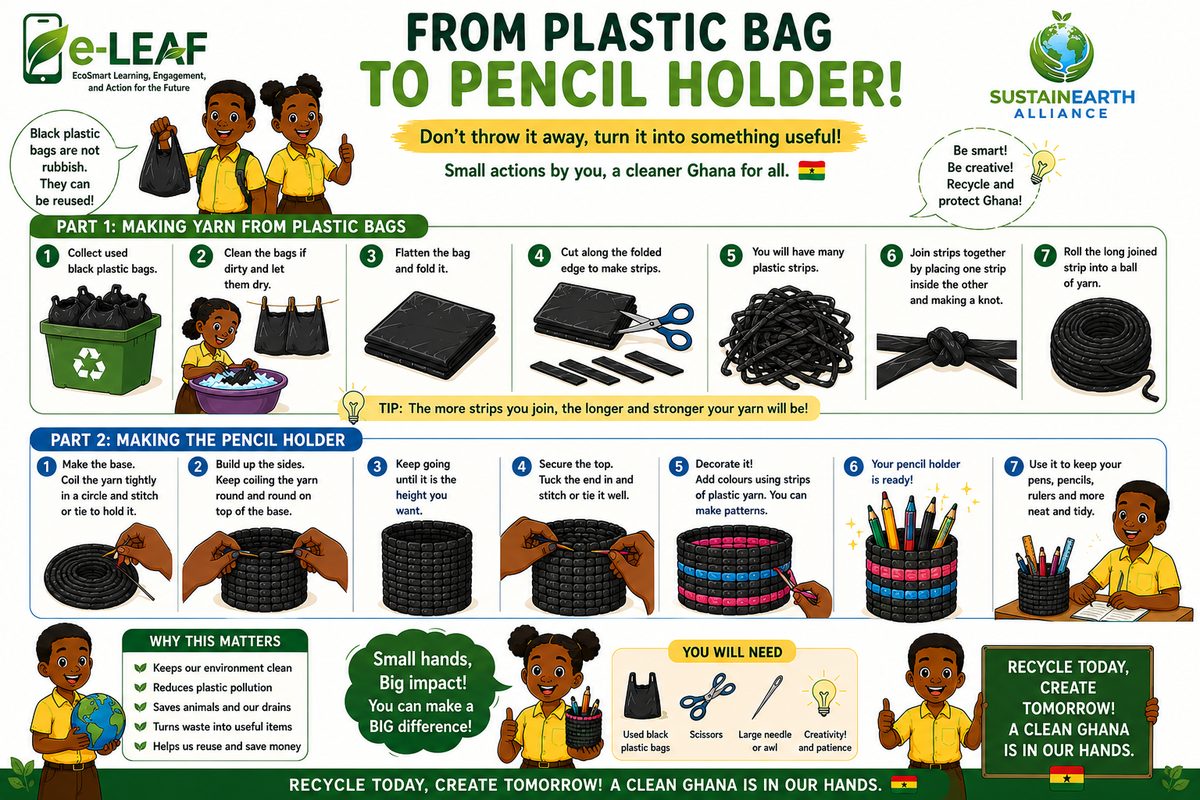
Creating lightweight, decorative pen and pencil holders for classroom desks and study areas.
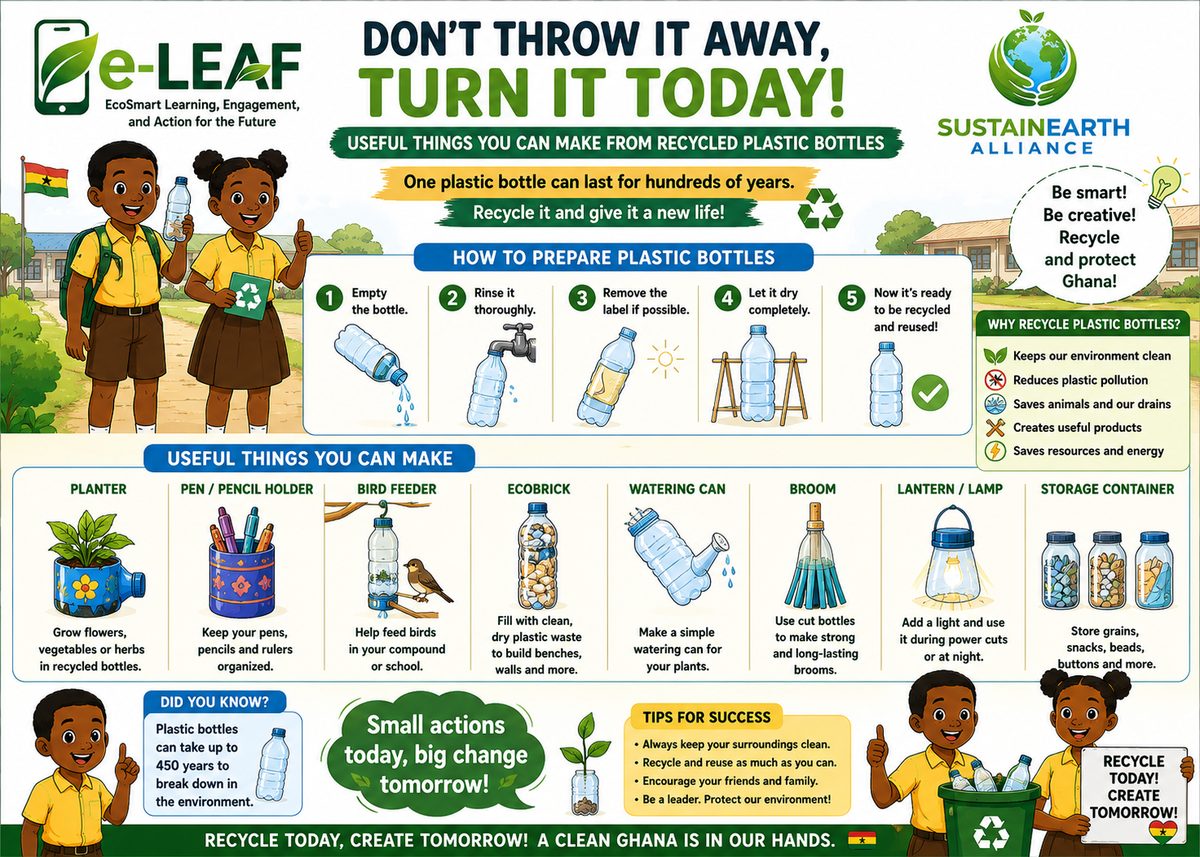
Repurposing discarded beverage bottles into plant nurseries, self-watering seedling pots, and household containers.
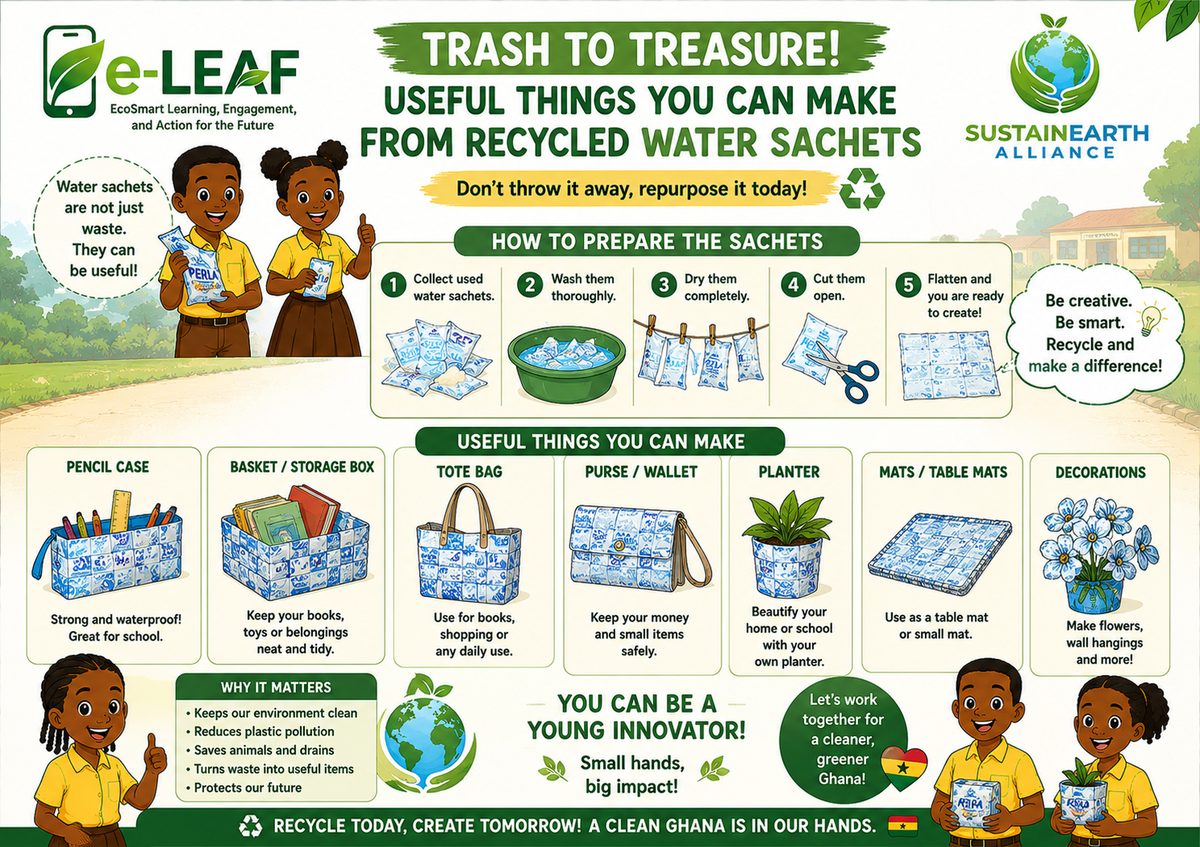
Tackling Ghana’s most prevalent litter problem: turning discarded drinking water sachets into functional bags and durable fabrics.
In Ghanaian towns and cities, indiscriminate dumping into storm drains is the number one cause of severe flash floods during torrential rains. When gutters are choked with plastic bags and refuse, water overflows into homes and streets.
Never dump trash into open drains. Participate in community desilting before rainy seasons.
Do not attempt to walk or drive through moving floodwaters — 6 inches of rushing water can sweep you away.
Turn off electrical mains if water enters buildings. Boil drinking water after floods to prevent cholera.
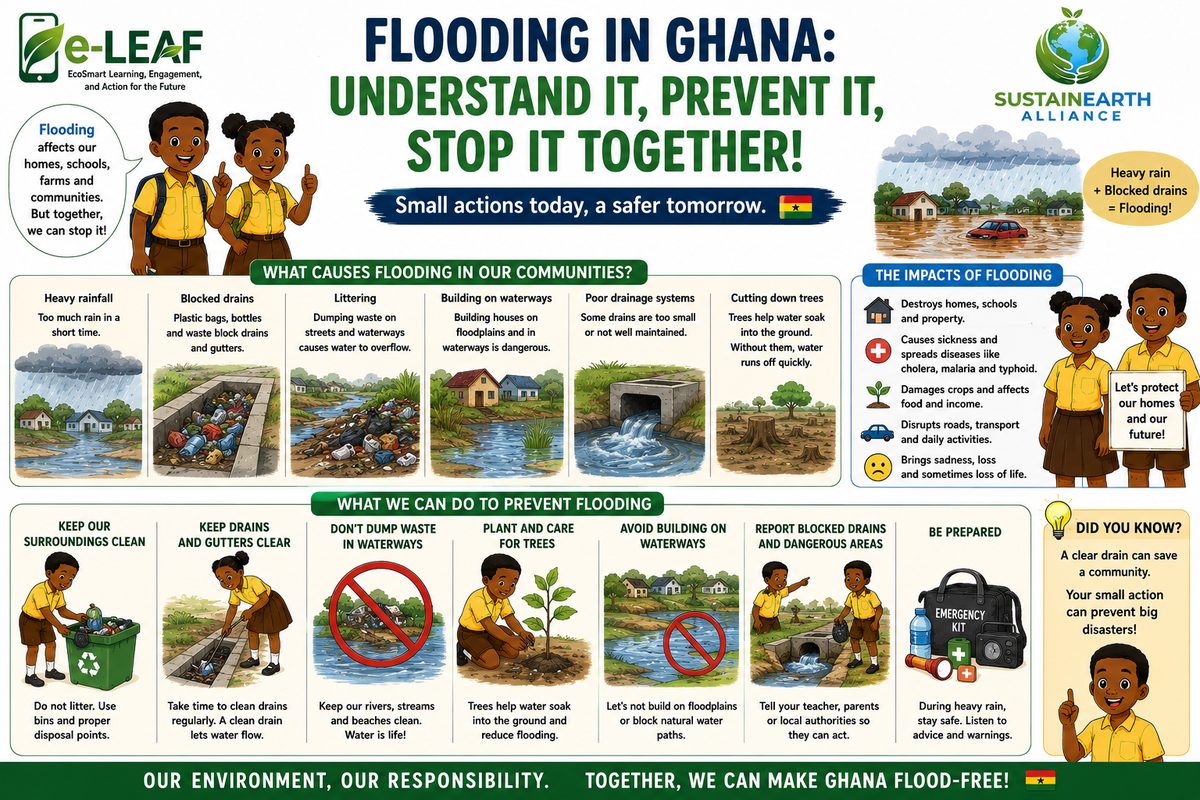
Click image to enlarge preview